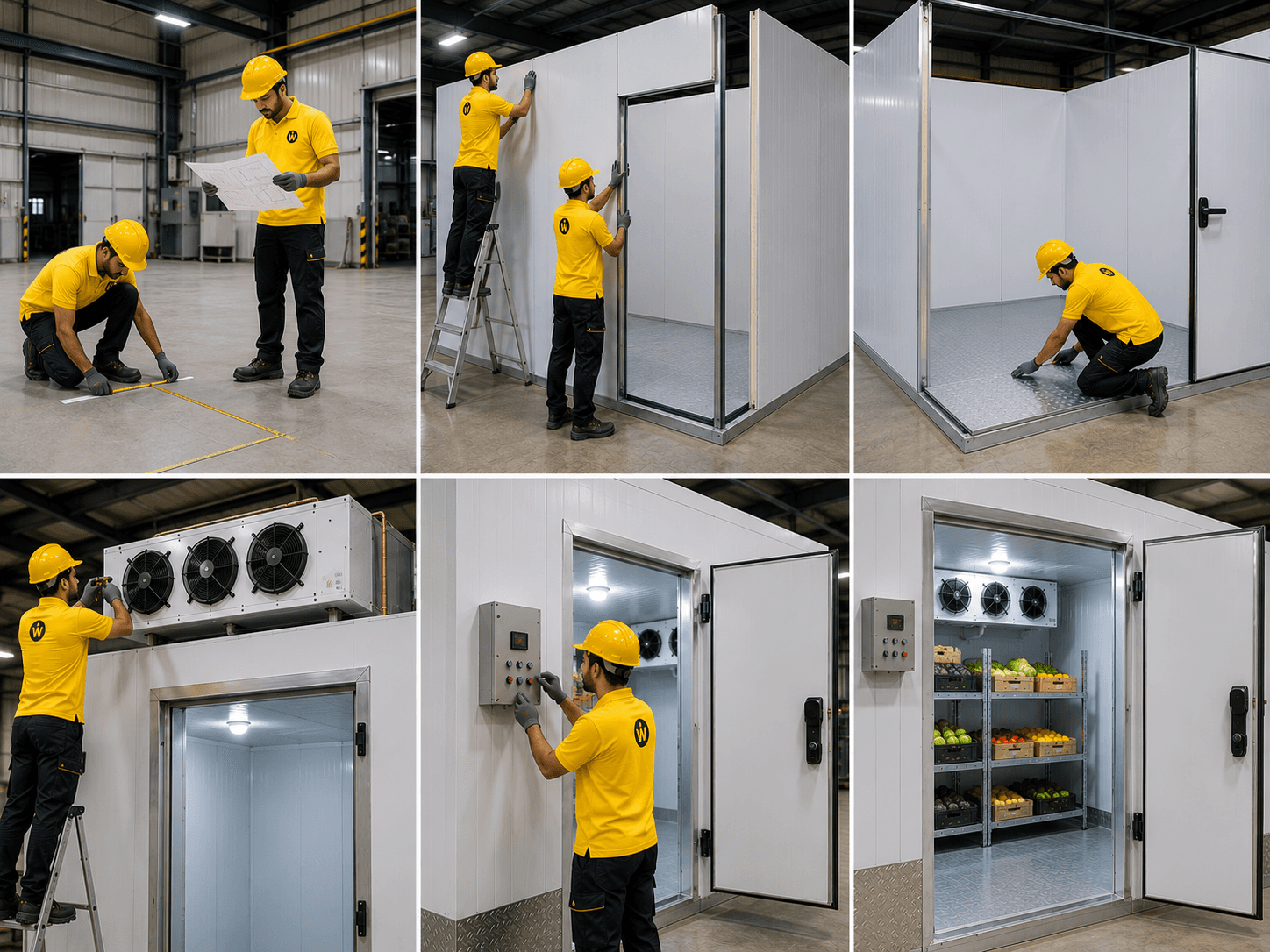
Commercial Cold Room Installation Process Explained
Walks clients through consultation, design, fabrication, installation, testing, commissioning, and final handover.
𝗖𝗼𝗺𝗺𝗲𝗿𝗰𝗶𝗮𝗹 𝗖𝗼𝗹𝗱 𝗥𝗼𝗼𝗺 𝗜𝗻𝘀𝘁𝗮𝗹𝗹𝗮𝘁𝗶𝗼𝗻 𝗣𝗿𝗼𝗰𝗲𝘀𝘀 𝗘𝘅𝗽𝗹𝗮𝗶𝗻𝗲𝗱
Installing a commercial cold room involves much more than assembling insulated panels and connecting refrigeration equipment. It is a carefully planned engineering process that requires technical expertise, accurate calculations, quality materials, and professional installation to ensure reliable long-term performance. Every stage of the installation contributes to the efficiency, durability, and overall success of the refrigeration system.
Whether the cold room is intended for a restaurant, supermarket, pharmaceutical facility, warehouse, catering company, hotel, or food processing plant, the installation process should always begin with understanding the operational needs of the business. A properly installed cold room not only maintains stable temperatures but also improves workflow, reduces energy consumption, protects valuable inventory, and minimises future maintenance costs.
Many refrigeration problems experienced by businesses are caused by poor planning or improper installation rather than equipment failure.
Incorrect sizing, poor insulation, inadequate airflow, and improper equipment positioning can all affect performance and increase operating costs over time. Following a structured installation process helps avoid these issues while ensuring the system operates efficiently from the first day of use.
At Technocrew Technical Services, every commercial cold room installation follows a systematic approach. From consultation and engineering to testing and final handover, every stage is completed with precision to deliver dependable refrigeration solutions for businesses across Dubai and the UAE.
𝗜𝗻𝗶𝘁𝗶𝗮𝗹 𝗖𝗼𝗻𝘀𝘂𝗹𝘁𝗮𝘁𝗶𝗼𝗻 𝗮𝗻𝗱 𝗥𝗲𝗾𝘂𝗶𝗿𝗲𝗺𝗲𝗻𝘁 𝗔𝘀𝘀𝗲𝘀𝘀𝗺𝗲𝗻𝘁
Every successful cold room project begins with understanding the client's business and storage requirements. Before any design work starts, it is important to evaluate how the cold room will be used, what products will be stored, and the daily operational demands.
During the consultation, several factors are considered, including:
• Type of products being stored
• Required storage temperature
• Expected storage capacity
• Available installation space
• Daily stock movement
• Future expansion plans
• Business operating hours
• Accessibility requirements
Gathering this information allows the engineering team to recommend a cold room solution that matches both current and future business needs.
𝗦𝗶𝘁𝗲 𝗜𝗻𝘀𝗽𝗲𝗰𝘁𝗶𝗼𝗻
After understanding the project requirements, a detailed site inspection is carried out. This stage helps identify any factors that may influence the installation or performance of the refrigeration system.
The inspection typically includes evaluating:
• Building layout
• Available floor space
• Ceiling height
• Structural conditions
• Electrical supply
• Ventilation
• Access routes
• Equipment positioning
• Drainage requirements
• Service accessibility
A thorough site inspection helps prevent installation challenges while ensuring the cold room integrates efficiently into the existing facility.
𝗘𝗻𝗴𝗶𝗻𝗲𝗲𝗿𝗶𝗻𝗴 𝗮𝗻𝗱 𝗦𝘆𝘀𝘁𝗲𝗺 𝗗𝗲𝘀𝗶𝗴𝗻
Once the site assessment is complete, the engineering team develops a cold room design tailored to the project's operational requirements.
The design process considers room dimensions, insulation specifications, refrigeration capacity, airflow, door placement, lighting, equipment layout, and energy efficiency. Every detail is carefully planned to ensure the completed system delivers reliable cooling while supporting smooth day-to-day operations.
Proper engineering at this stage helps reduce installation delays and minimises the need for costly modifications later.
𝗦𝗲𝗹𝗲𝗰𝘁𝗶𝗻𝗴 𝘁𝗵𝗲 𝗥𝗶𝗴𝗵𝘁 𝗥𝗲𝗳𝗿𝗶𝗴𝗲𝗿𝗮𝘁𝗶𝗼𝗻 𝗦𝘆𝘀𝘁𝗲𝗺
The refrigeration system is the heart of every commercial cold room. Selecting equipment that matches the cooling load is essential for achieving stable temperatures and efficient operation.
When choosing refrigeration equipment, engineers evaluate:
• Room size
• Storage temperature
• Product type
• Heat load
• Frequency of door openings
• Ambient operating conditions
• Energy efficiency requirements
• Future operational growth
Properly sized equipment provides dependable cooling without placing unnecessary strain on the refrigeration system.
𝗜𝗻𝘀𝘁𝗮𝗹𝗹𝗶𝗻𝗴 𝗜𝗻𝘀𝘂𝗹𝗮𝘁𝗲𝗱 𝗣𝗮𝗻𝗲𝗹𝘀
Insulated wall and ceiling panels form the structure of the cold room. These panels help reduce heat transfer and create a controlled storage environment.
During installation, each panel is positioned carefully to create airtight joints that minimise energy loss. Proper installation of insulated panels improves temperature stability while increasing the overall efficiency of the refrigeration system.
Quality insulation also helps reduce compressor workload and lowers long-term electricity consumption.
𝗜𝗻𝘀𝘁𝗮𝗹𝗹𝗶𝗻𝗴 𝗖𝗼𝗹𝗱 𝗥𝗼𝗼𝗺 𝗗𝗼𝗼𝗿𝘀
Cold room doors are installed with precision to ensure effective sealing and smooth daily operation.
Well-installed doors help prevent warm air from entering the storage area while reducing unnecessary energy loss. Door placement is also planned to improve workflow, allowing staff to move products safely and efficiently throughout daily operations.
Reliable door systems contribute significantly to maintaining consistent storage temperatures.
𝗥𝗲𝗳𝗿𝗶𝗴𝗲𝗿𝗮𝘁𝗶𝗼𝗻 𝗘𝗾𝘂𝗶𝗽𝗺𝗲𝗻𝘁 𝗜𝗻𝘀𝘁𝗮𝗹𝗹𝗮𝘁𝗶𝗼𝗻
Once the room structure is complete, refrigeration equipment is installed according to the approved engineering design.
This stage includes positioning the refrigeration components, installing refrigerant piping, connecting electrical systems, and integrating temperature control equipment.
Proper installation ensures efficient airflow, reliable cooling performance, and safe system operation under continuous commercial use.
𝗘𝗹𝗲𝗰𝘁𝗿𝗶𝗰𝗮𝗹 𝗮𝗻𝗱 𝗖𝗼𝗻𝘁𝗿𝗼𝗹 𝗦𝘆𝘀𝘁𝗲𝗺 𝗜𝗻𝘀𝘁𝗮𝗹𝗹𝗮𝘁𝗶𝗼𝗻
Modern commercial cold rooms rely on electrical systems and digital controls to monitor and regulate operating conditions.
These systems help maintain accurate temperatures, improve energy efficiency, and support safe operation.
The installation includes:
• Electrical control panels
• Temperature sensors
• Digital controllers
• Interior lighting
• Safety protection devices
• Power connections
• Equipment monitoring systems
Proper electrical installation ensures dependable operation while supporting future maintenance and servicing.
𝗦𝘆𝘀𝘁𝗲𝗺 𝗧𝗲𝘀𝘁𝗶𝗻𝗴 𝗮𝗻𝗱 𝗖𝗼𝗺𝗺𝗶𝘀𝘀𝗶𝗼𝗻𝗶𝗻𝗴
Before the cold room is handed over, every system undergoes comprehensive testing to verify performance.
Testing confirms that the refrigeration system operates correctly, maintains the required temperature, and performs efficiently under normal operating conditions.
Commissioning typically includes:
• Refrigeration performance testing
• Temperature verification
• Airflow inspection
• Electrical system checks
• Door sealing inspection
• Safety device testing
• Control system calibration
• Operational performance checks
This stage ensures the cold room is fully operational before entering daily service.
𝗣𝗲𝗿𝗳𝗼𝗿𝗺𝗮𝗻𝗰𝗲 𝗢𝗽𝘁𝗶𝗺𝗶𝘀𝗮𝘁𝗶𝗼𝗻
Following commissioning, the refrigeration system is fine-tuned to achieve the best possible operating performance.
Adjustments may be made to temperature settings, airflow, refrigeration controls, and equipment operation to maximise efficiency while maintaining reliable cooling.
Optimising system performance helps reduce energy consumption and supports long-term operational reliability.
𝗜𝗺𝗽𝗼𝗿𝘁𝗮𝗻𝗰𝗲 𝗼𝗳 𝗣𝗿𝗼𝗳𝗲𝘀𝘀𝗶𝗼𝗻𝗮𝗹 𝗜𝗻𝘀𝘁𝗮𝗹𝗹𝗮𝘁𝗶𝗼𝗻
Professional installation directly influences the lifespan, efficiency, and reliability of a commercial cold room.
A correctly installed system provides:
• Stable temperature control
• Improved energy efficiency
• Reduced operating costs
• Better airflow
• Reliable equipment performance
• Easier maintenance
• Longer equipment lifespan
• Reduced risk of unexpected breakdowns
Investing in professional installation helps businesses maximise the value of their refrigeration system over many years.
𝗖𝗼𝗺𝗺𝗼𝗻 𝗜𝗻𝘀𝘁𝗮𝗹𝗹𝗮𝘁𝗶𝗼𝗻 𝗠𝗶𝘀𝘁𝗮𝗸𝗲𝘀 𝘁𝗼 𝗔𝘃𝗼𝗶𝗱
Poor installation can reduce efficiency and increase maintenance requirements.
Some of the most common installation mistakes include:
• Incorrect equipment sizing
• Poor insulation installation
• Improper refrigeration piping
• Inadequate airflow planning
• Incorrect door positioning
• Weak electrical connections
• Poor ventilation around equipment
• Incomplete system testing
Avoiding these issues helps ensure reliable operation and long-term performance.
𝗪𝗵𝘆 𝗢𝗻𝗴𝗼𝗶𝗻𝗴 𝗠𝗮𝗶𝗻𝘁𝗲𝗻𝗮𝗻𝗰𝗲 𝗠𝗮𝘁𝘁𝗲𝗿𝘀
Installation is only the beginning of a cold room's lifecycle. Regular maintenance helps keep refrigeration equipment operating efficiently while reducing the risk of unexpected failures.
Routine servicing includes inspecting refrigeration components, checking electrical systems, verifying temperature accuracy, cleaning equipment, and monitoring overall system performance.
Preventive maintenance extends equipment lifespan, improves efficiency, and helps businesses avoid costly downtime.
𝗪𝗵𝘆 𝗖𝗵𝗼𝗼𝘀𝗲 𝗧𝗲𝗰𝗵𝗻𝗼𝗰𝗿𝗲𝘄 𝗧𝗲𝗰𝗵𝗻𝗶𝗰𝗮𝗹 𝗦𝗲𝗿𝘃𝗶𝗰𝗲𝘀?
Technocrew Technical Services delivers complete commercial cold room installation solutions for businesses across Dubai and the UAE. Every project is managed by experienced professionals who understand the importance of proper engineering, quality workmanship, and dependable system performance.
From consultation and site assessment to engineering, installation, commissioning, and ongoing maintenance, our team ensures every cold room is built to meet the specific operational requirements of the business. By combining technical expertise with practical experience, Technocrew provides reliable refrigeration solutions that help businesses improve efficiency, protect valuable inventory, and achieve long-term operational success.
Need Expert Help?
Expert technical services across the UAE. Reliable refrigeration, climate control & maintenance.
𝗖𝗼𝗺𝗺𝗲𝗿𝗰𝗶𝗮𝗹 𝗖𝗼𝗹𝗱 𝗥𝗼𝗼𝗺 𝗜𝗻𝘀𝘁𝗮𝗹𝗹𝗮𝘁𝗶𝗼𝗻 𝗣𝗿𝗼𝗰𝗲𝘀𝘀 𝗘𝘅𝗽𝗹𝗮𝗶𝗻𝗲𝗱
Installing a commercial cold room involves much more than assembling insulated panels and connecting refrigeration equipment. It is a carefully planned engineering process that requires technical expertise, accurate calculations, quality materials, and professional installation to ensure reliable long-term performance. Every stage of the installation contributes to the efficiency, durability, and overall success of the refrigeration system.
Whether the cold room is intended for a restaurant, supermarket, pharmaceutical facility, warehouse, catering company, hotel, or food processing plant, the installation process should always begin with understanding the operational needs of the business. A properly installed cold room not only maintains stable temperatures but also improves workflow, reduces energy consumption, protects valuable inventory, and minimises future maintenance costs.
Many refrigeration problems experienced by businesses are caused by poor planning or improper installation rather than equipment failure.
Incorrect sizing, poor insulation, inadequate airflow, and improper equipment positioning can all affect performance and increase operating costs over time. Following a structured installation process helps avoid these issues while ensuring the system operates efficiently from the first day of use.
At Technocrew Technical Services, every commercial cold room installation follows a systematic approach. From consultation and engineering to testing and final handover, every stage is completed with precision to deliver dependable refrigeration solutions for businesses across Dubai and the UAE.
𝗜𝗻𝗶𝘁𝗶𝗮𝗹 𝗖𝗼𝗻𝘀𝘂𝗹𝘁𝗮𝘁𝗶𝗼𝗻 𝗮𝗻𝗱 𝗥𝗲𝗾𝘂𝗶𝗿𝗲𝗺𝗲𝗻𝘁 𝗔𝘀𝘀𝗲𝘀𝘀𝗺𝗲𝗻𝘁
Every successful cold room project begins with understanding the client's business and storage requirements. Before any design work starts, it is important to evaluate how the cold room will be used, what products will be stored, and the daily operational demands.
During the consultation, several factors are considered, including:
• Type of products being stored
• Required storage temperature
• Expected storage capacity
• Available installation space
• Daily stock movement
• Future expansion plans
• Business operating hours
• Accessibility requirements
Gathering this information allows the engineering team to recommend a cold room solution that matches both current and future business needs.
𝗦𝗶𝘁𝗲 𝗜𝗻𝘀𝗽𝗲𝗰𝘁𝗶𝗼𝗻
After understanding the project requirements, a detailed site inspection is carried out. This stage helps identify any factors that may influence the installation or performance of the refrigeration system.
The inspection typically includes evaluating:
• Building layout
• Available floor space
• Ceiling height
• Structural conditions
• Electrical supply
• Ventilation
• Access routes
• Equipment positioning
• Drainage requirements
• Service accessibility
A thorough site inspection helps prevent installation challenges while ensuring the cold room integrates efficiently into the existing facility.
𝗘𝗻𝗴𝗶𝗻𝗲𝗲𝗿𝗶𝗻𝗴 𝗮𝗻𝗱 𝗦𝘆𝘀𝘁𝗲𝗺 𝗗𝗲𝘀𝗶𝗴𝗻
Once the site assessment is complete, the engineering team develops a cold room design tailored to the project's operational requirements.
The design process considers room dimensions, insulation specifications, refrigeration capacity, airflow, door placement, lighting, equipment layout, and energy efficiency. Every detail is carefully planned to ensure the completed system delivers reliable cooling while supporting smooth day-to-day operations.
Proper engineering at this stage helps reduce installation delays and minimises the need for costly modifications later.
𝗦𝗲𝗹𝗲𝗰𝘁𝗶𝗻𝗴 𝘁𝗵𝗲 𝗥𝗶𝗴𝗵𝘁 𝗥𝗲𝗳𝗿𝗶𝗴𝗲𝗿𝗮𝘁𝗶𝗼𝗻 𝗦𝘆𝘀𝘁𝗲𝗺
The refrigeration system is the heart of every commercial cold room. Selecting equipment that matches the cooling load is essential for achieving stable temperatures and efficient operation.
When choosing refrigeration equipment, engineers evaluate:
• Room size
• Storage temperature
• Product type
• Heat load
• Frequency of door openings
• Ambient operating conditions
• Energy efficiency requirements
• Future operational growth
Properly sized equipment provides dependable cooling without placing unnecessary strain on the refrigeration system.
𝗜𝗻𝘀𝘁𝗮𝗹𝗹𝗶𝗻𝗴 𝗜𝗻𝘀𝘂𝗹𝗮𝘁𝗲𝗱 𝗣𝗮𝗻𝗲𝗹𝘀
Insulated wall and ceiling panels form the structure of the cold room. These panels help reduce heat transfer and create a controlled storage environment.
During installation, each panel is positioned carefully to create airtight joints that minimise energy loss. Proper installation of insulated panels improves temperature stability while increasing the overall efficiency of the refrigeration system.
Quality insulation also helps reduce compressor workload and lowers long-term electricity consumption.
𝗜𝗻𝘀𝘁𝗮𝗹𝗹𝗶𝗻𝗴 𝗖𝗼𝗹𝗱 𝗥𝗼𝗼𝗺 𝗗𝗼𝗼𝗿𝘀
Cold room doors are installed with precision to ensure effective sealing and smooth daily operation.
Well-installed doors help prevent warm air from entering the storage area while reducing unnecessary energy loss. Door placement is also planned to improve workflow, allowing staff to move products safely and efficiently throughout daily operations.
Reliable door systems contribute significantly to maintaining consistent storage temperatures.
𝗥𝗲𝗳𝗿𝗶𝗴𝗲𝗿𝗮𝘁𝗶𝗼𝗻 𝗘𝗾𝘂𝗶𝗽𝗺𝗲𝗻𝘁 𝗜𝗻𝘀𝘁𝗮𝗹𝗹𝗮𝘁𝗶𝗼𝗻
Once the room structure is complete, refrigeration equipment is installed according to the approved engineering design.
This stage includes positioning the refrigeration components, installing refrigerant piping, connecting electrical systems, and integrating temperature control equipment.
Proper installation ensures efficient airflow, reliable cooling performance, and safe system operation under continuous commercial use.
𝗘𝗹𝗲𝗰𝘁𝗿𝗶𝗰𝗮𝗹 𝗮𝗻𝗱 𝗖𝗼𝗻𝘁𝗿𝗼𝗹 𝗦𝘆𝘀𝘁𝗲𝗺 𝗜𝗻𝘀𝘁𝗮𝗹𝗹𝗮𝘁𝗶𝗼𝗻
Modern commercial cold rooms rely on electrical systems and digital controls to monitor and regulate operating conditions.
These systems help maintain accurate temperatures, improve energy efficiency, and support safe operation.
The installation includes:
• Electrical control panels
• Temperature sensors
• Digital controllers
• Interior lighting
• Safety protection devices
• Power connections
• Equipment monitoring systems
Proper electrical installation ensures dependable operation while supporting future maintenance and servicing.
𝗦𝘆𝘀𝘁𝗲𝗺 𝗧𝗲𝘀𝘁𝗶𝗻𝗴 𝗮𝗻𝗱 𝗖𝗼𝗺𝗺𝗶𝘀𝘀𝗶𝗼𝗻𝗶𝗻𝗴
Before the cold room is handed over, every system undergoes comprehensive testing to verify performance.
Testing confirms that the refrigeration system operates correctly, maintains the required temperature, and performs efficiently under normal operating conditions.
Commissioning typically includes:
• Refrigeration performance testing
• Temperature verification
• Airflow inspection
• Electrical system checks
• Door sealing inspection
• Safety device testing
• Control system calibration
• Operational performance checks
This stage ensures the cold room is fully operational before entering daily service.
𝗣𝗲𝗿𝗳𝗼𝗿𝗺𝗮𝗻𝗰𝗲 𝗢𝗽𝘁𝗶𝗺𝗶𝘀𝗮𝘁𝗶𝗼𝗻
Following commissioning, the refrigeration system is fine-tuned to achieve the best possible operating performance.
Adjustments may be made to temperature settings, airflow, refrigeration controls, and equipment operation to maximise efficiency while maintaining reliable cooling.
Optimising system performance helps reduce energy consumption and supports long-term operational reliability.
𝗜𝗺𝗽𝗼𝗿𝘁𝗮𝗻𝗰𝗲 𝗼𝗳 𝗣𝗿𝗼𝗳𝗲𝘀𝘀𝗶𝗼𝗻𝗮𝗹 𝗜𝗻𝘀𝘁𝗮𝗹𝗹𝗮𝘁𝗶𝗼𝗻
Professional installation directly influences the lifespan, efficiency, and reliability of a commercial cold room.
A correctly installed system provides:
• Stable temperature control
• Improved energy efficiency
• Reduced operating costs
• Better airflow
• Reliable equipment performance
• Easier maintenance
• Longer equipment lifespan
• Reduced risk of unexpected breakdowns
Investing in professional installation helps businesses maximise the value of their refrigeration system over many years.
𝗖𝗼𝗺𝗺𝗼𝗻 𝗜𝗻𝘀𝘁𝗮𝗹𝗹𝗮𝘁𝗶𝗼𝗻 𝗠𝗶𝘀𝘁𝗮𝗸𝗲𝘀 𝘁𝗼 𝗔𝘃𝗼𝗶𝗱
Poor installation can reduce efficiency and increase maintenance requirements.
Some of the most common installation mistakes include:
• Incorrect equipment sizing
• Poor insulation installation
• Improper refrigeration piping
• Inadequate airflow planning
• Incorrect door positioning
• Weak electrical connections
• Poor ventilation around equipment
• Incomplete system testing
Avoiding these issues helps ensure reliable operation and long-term performance.
𝗪𝗵𝘆 𝗢𝗻𝗴𝗼𝗶𝗻𝗴 𝗠𝗮𝗶𝗻𝘁𝗲𝗻𝗮𝗻𝗰𝗲 𝗠𝗮𝘁𝘁𝗲𝗿𝘀
Installation is only the beginning of a cold room's lifecycle. Regular maintenance helps keep refrigeration equipment operating efficiently while reducing the risk of unexpected failures.
Routine servicing includes inspecting refrigeration components, checking electrical systems, verifying temperature accuracy, cleaning equipment, and monitoring overall system performance.
Preventive maintenance extends equipment lifespan, improves efficiency, and helps businesses avoid costly downtime.
𝗪𝗵𝘆 𝗖𝗵𝗼𝗼𝘀𝗲 𝗧𝗲𝗰𝗵𝗻𝗼𝗰𝗿𝗲𝘄 𝗧𝗲𝗰𝗵𝗻𝗶𝗰𝗮𝗹 𝗦𝗲𝗿𝘃𝗶𝗰𝗲𝘀?
Technocrew Technical Services delivers complete commercial cold room installation solutions for businesses across Dubai and the UAE. Every project is managed by experienced professionals who understand the importance of proper engineering, quality workmanship, and dependable system performance.
From consultation and site assessment to engineering, installation, commissioning, and ongoing maintenance, our team ensures every cold room is built to meet the specific operational requirements of the business. By combining technical expertise with practical experience, Technocrew provides reliable refrigeration solutions that help businesses improve efficiency, protect valuable inventory, and achieve long-term operational success.
Need Expert Help?
Expert technical services across the UAE. Reliable refrigeration, climate control & maintenance.
Our Services
Other Resources
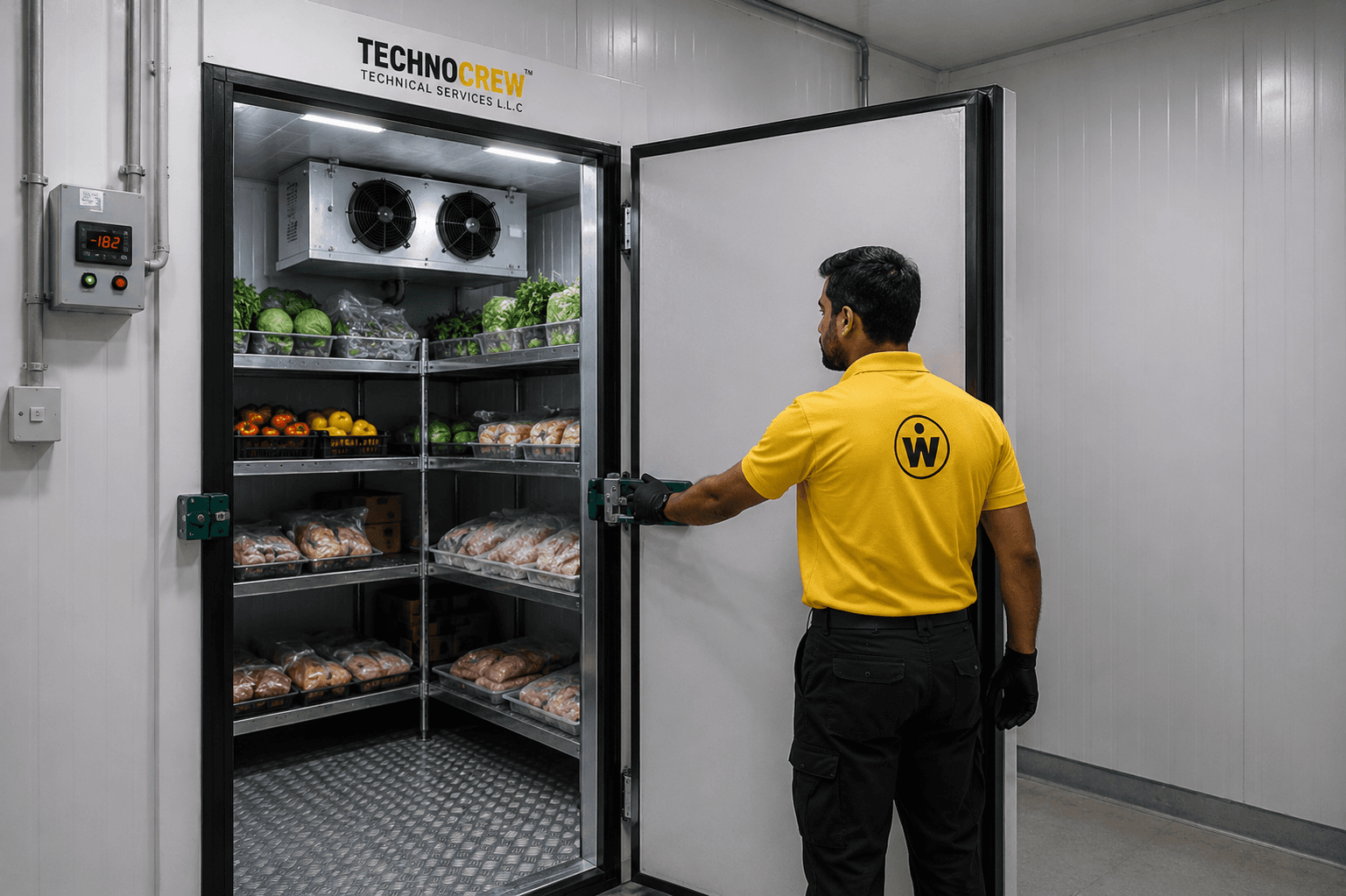
Cold Room Design & Installation
Complete design, fabrication, and installation of walk-in cold rooms, freezer rooms, and blast chillers engineered for commercial and industrial temperature-controlled storage across the UAE.
Get Service
Cold Room Design & Installation
Complete design, fabrication, and installation of walk-in cold rooms, freezer rooms, and blast chillers engineered for commercial and industrial temperature-controlled storage across the UAE.
Get Service
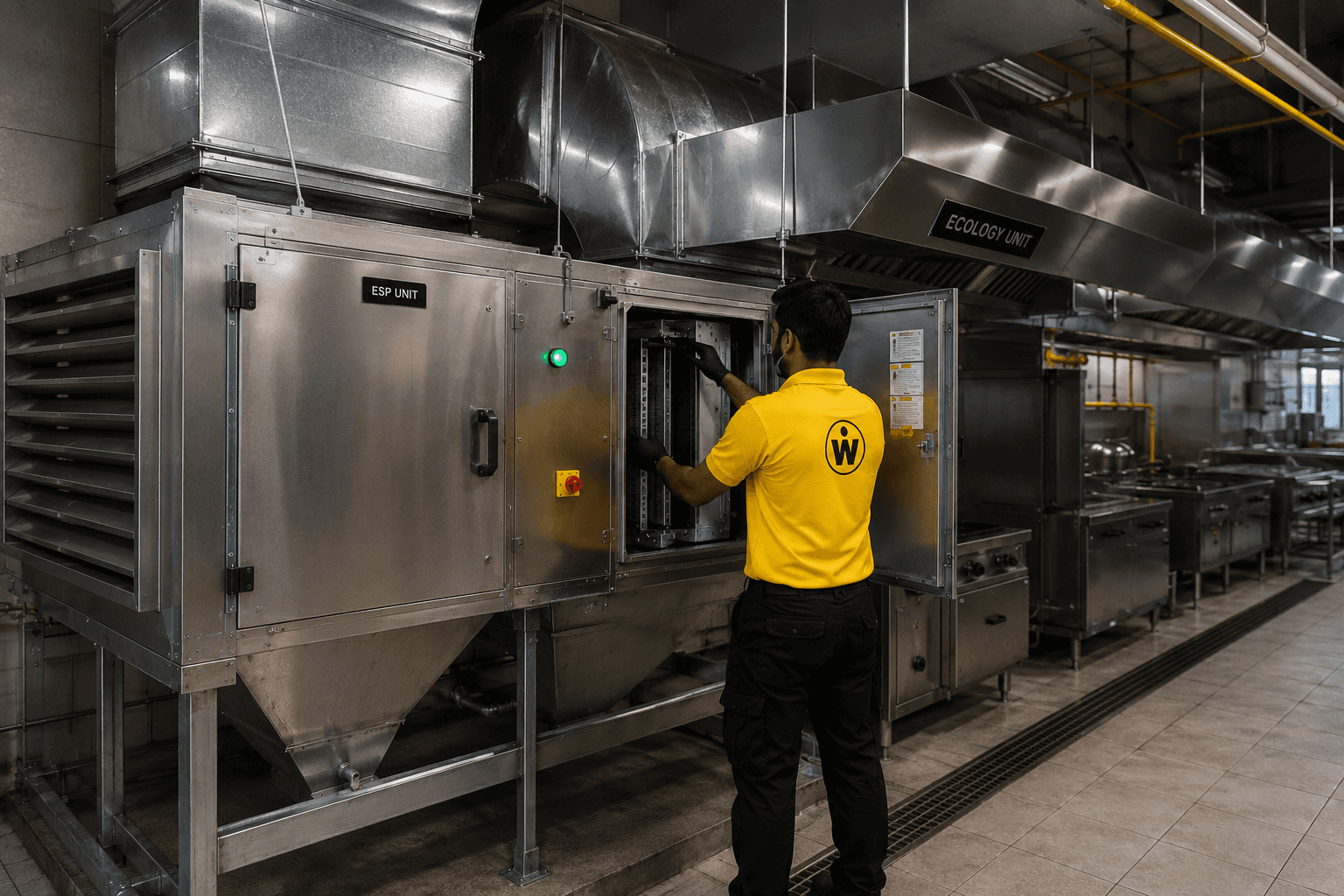
ESP & Ecology Units
Commercial kitchen ecology systems and electrostatic precipitators engineered for grease filtration, smoke control, odour reduction, and Dubai Municipality air quality compliance.
Get Service
ESP & Ecology Units
Commercial kitchen ecology systems and electrostatic precipitators engineered for grease filtration, smoke control, odour reduction, and Dubai Municipality air quality compliance.
Get Service
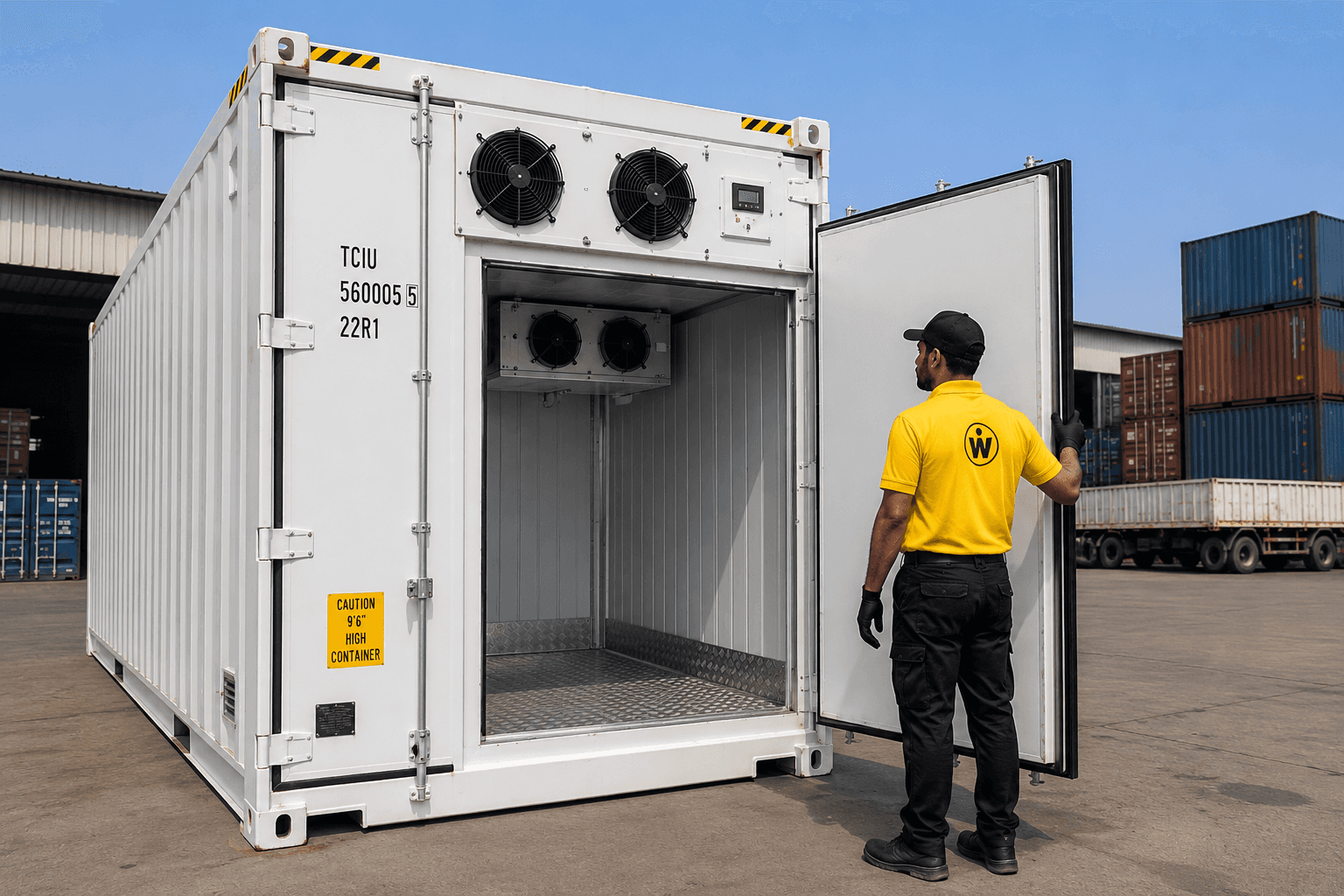
Container Cold Rooms
Turnkey containerised refrigeration units designed for logistics, fisheries, remote sites, events, and industrial operations requiring dependable mobile cold storage solutions.
Get Service
Container Cold Rooms
Turnkey containerised refrigeration units designed for logistics, fisheries, remote sites, events, and industrial operations requiring dependable mobile cold storage solutions.
Get Service
FAQ
Answers to Your Plumbing Questions
Find quick answers to common plumbing questions. From emergency repairs to routine maintenance, PlumFix is here to provide reliable solutions and peace of mind.
What technical services do you offer?
Do you have full-time in-house engineers?
Do your services deliver quality results?
How do I request a project quote?
Do you provide upfront pricing?
How can I schedule a consultation call?

Need Fast & Reliable Expert TECHNICAL Services?
Whether it's a routine service or an urgent technical issue, Technocrew is ready to deliver professional solutions with expert workmanship, transparent pricing, and dependable service you can trust.

Need Fast & Reliable Engineering Solutions?
Whether it's a cold room, container build, or full technical project, Technocrew delivers professional solutions with expert workmanship, transparent pricing, and dependable service you can trust.

Need Fast & Reliable Expert TECHNICAL Services?
Whether it's a routine service or an urgent technical issue, Technocrew is ready to deliver professional solutions with expert workmanship, transparent pricing, and dependable service you can trust.